You open Twitch and everyone seems to be playing the same thing. It is not a giant studio's latest release. It is some little characters hauling scrap, friends attached to a chain, or someone painted like a wall hoping nobody notices. Two days later, your group chat is arranging a session. How does something that looks so straightforward spread so quickly?
Streamers are part of the answer, but they are not the whole story. These games hand them situations that need no script: an unconvincing lie, a badly timed scare, a fall that ruins everybody's progress. Viewers get the joke and think, “My friends would make an even bigger mess of this.” That is where watching starts turning into wanting to play.
Easy to follow, hard to predict
Here, “simple” mainly means a clear premise and a session that viewers can follow. It does not mean easy development or a lack of depth. Schedule I, for example, combines several management systems. Yet a small disaster can communicate what has gone wrong without asking the audience to study an inventory or learn an entire backstory.
The pattern is familiar: a creator tries something, good clips emerge, those clips circulate, and other channels join in. Viewers then bring their friends. The game still needs to give people a reason to stay. These ten examples show different ways that happens.
1. Among Us: the argument is the entertainment
Released in 2018, Among Us became a worldwide phenomenon in 2020. Its tasks are easy to understand; the entertainment comes from accusations and excuses. Watching somebody defend a terrible lie can be more enjoyable than watching a flawless play. Creators helped bring those arguments to large audiences.
The viewer's perspective matters. We can know who the impostor is while the group confidently blames the wrong person. That creates suspense and a powerful urge to intervene. Pandemic restrictions also made remote social games particularly appealing. Crediting one streamer with everything would miss the mix of circumstances, communities and social design that made it work.
2. Phasmophobia: fear travels through the microphone
In 2020, Phasmophobia turned paranormal investigations into shared panic. The basic assignment is clear: enter a haunted location, gather evidence and identify the ghost. Then somebody loses their nerve. The equipment and investigation involve more detail than a clip suggests, but anybody can understand being afraid to enter the next room.
On a stream, sound does much of the work. A voice fading into the distance, an unexpected silence or an enormous reaction tells a story with little explanation. Viewers watch familiar personalities outside their comfort zone. Buyers do not have to reproduce the exact scare from a video, either. The next session can produce a completely different one.
3. Only Up!: everyone understands a fall
Only Up! attracted enormous attention in 2023 around an instantly readable objective: keep climbing. Seeing the ground disappear below is enough to understand the risk. No knowledge of statistics, characters or competitive rules is necessary. A jump builds the suspense; a fall delivers a fairly brutal ending.
The format feeds that “one more attempt” feeling for both players and viewers. An audience starts rooting for the creator while sometimes spotting a mistake before it happens. This is a historical example rather than a current purchase recommendation: the original game was eventually removed from Steam. Becoming famous and remaining available are separate issues.
4. Lethal Company: a terrible shift makes good viewing
In 2023, Lethal Company sent groups into dangerous facilities to collect scrap and meet a quota. The routine resembles work; the colleagues turn it into a disaster. One stays behind, another insists on carrying one more item, and somebody encounters a creature when they really should have left already.
Proximity voice chat helps make those situations convincing, changing conversation with distance and danger. Viewers get little stories with a setup and a payoff. The rough appearance also leaves room for imagination. What matters is knowing where your friend went and wondering why they suddenly stopped answering.
5. Content Warning: recording the disaster is the job
Content Warning, released in 2024, took the idea further: the group films frightening encounters to chase success on a fictional video platform. The objective already resembles the work of many creators. Running away from a monster might be sensible, but getting a good recording matters too.
Watching the footage afterwards gives each adventure a second comic payoff. The first 24 hours being free to claim also helped the game spread, so streaming cannot take all the credit. Here, the launch made trying it easy and the sessions supplied material that kept the conversation going.
6. Chained Together: one mistake, several suspects
Chained Together became a streaming highlight in 2024 through a strong visual rule: climb as a group while physically connected by a chain. Even someone joining halfway through can understand why a badly judged jump threatens everybody. The dependence between players supplies the rest of the drama.
The funny part is not necessarily falling. It is negotiating before the jump, the person who ignores the signal, and the subsequent argument about who pulled whom. When several creators stream together, their different viewpoints offer competing accounts of the same disaster. The chain connects characters while putting personalities under pressure.
7. Schedule I: the routine gets out of hand
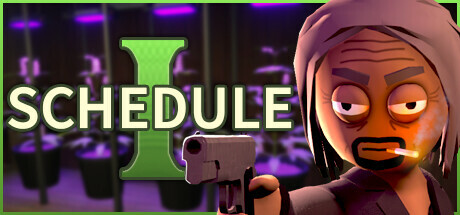
Schedule I entered early access in 2025 and gained substantial streaming exposure. Its subject is an illegal drug business in a fictional city, involving production, sales and expansion. There is a useful distinction here: its systems are not as simple as those of a climbing game. What immediately comes across is its potential for chaos.
Management routines become stories when friends improvise and make questionable decisions. Stream Hatchet's analysis found that twenty of the first quarter's top hundred streamers played it within its first three weeks. That documents exposure. It does not establish that every purchase resulted from a broadcast, or isolate streaming from every other influence.
8. R.E.P.O.: mind the furniture
In 2025's R.E.P.O., moving valuable objects through dangerous places becomes a coordination problem. Finding the loot is only part of the job; getting it out intact matters too. Physics creates complications anyone can recognise. An awkward object caught in a doorway can become more stressful than the monster somewhere down the corridor.
The characters, voices and movements help sell the comedy. Viewers can see trouble approaching and wait to discover who will make the situation worse. Its relationship with other cooperative horror games is obvious, but fragile cargo changes the pace and gives these sessions their own identity.
9. PEAK: the mountain gives friends a reason to help
PEAK arrived in 2025 with an easy pitch: climb your way off an island. In practice, the ascent involves choices about routes, supplies and helping companions. One player reaches safety and watches the others struggle to follow. Tension comes from the gap between succeeding individually and getting the whole group through.
Streams made that balance of cooperation and clumsiness easy to appreciate. For a viewer, understanding the problem and imagining a solution are only a moment apart. Wanting to shout “grab that ledge!” makes the climb feel participatory even when you are only watching. The goal remains clear while the human complications keep changing.
10. MECCHA CHAMELEON: the joke is hiding in plain sight
MECCHA CHAMELEON, released in 2026, adds body painting to hide-and-seek, letting players try to blend into the scenery. Much of the fun comes from the gap between a disguise its maker considers brilliant and a figure that looks absurdly obvious to an observer. Occasionally, the ridiculous attempt works.
That situation is particularly suited to short video: show the hiding place, bring the seeker closer, then wait. Creators amplified the reach of that visual joke. Viewers participate mentally as well, scanning for something that does not belong. You do not need to win a round to enjoy the reveal, and the next hiding place can offer a fresh variation.
What remains when the trend moves on?
Streamers accelerate discovery, but they cannot manufacture enjoyment from nothing. Viewing figures alone cannot tell us how many sales they caused. Price, access, available friends, updates and the experience itself all matter. Millions of people can enjoy watching a game without wanting to play it.
Before buying the next sensation, watch a longer session, check whether it suits your group and compare available prices. A clip shows the best minute; you will be playing the others too. When the idea holds up over those hours, it stops being “that game we saw on Twitch” and becomes a story your own friends keep telling.
Sources
- Among Us — Innersloth
- Phasmophobia — Steam
- Only Up! — Streams Charts
- Lethal Company — Steam
- Content Warning — Steam
- Content Warning — Streams Charts
- Chained Together — Streams Charts
- Schedule I — Steam
- Schedule I — Stream Hatchet
- R.E.P.O. — Streams Charts
- PEAK — Streams Charts
- MECCHA CHAMELEON — Steam
- MECCHA CHAMELEON — PC Gamer
We may earn a commission when you use an eligible store link. This does not change the displayed price or the order of the comparison.